The “Golden Hour”: What to Do the First 60 Minutes After Knocking Out a Tooth Chatsworth, CA

A knocked-out tooth is a dental emergency that requires prompt attention. When it happens, time becomes your most important ally. The first 60 minutes, often referred to as the “Golden Hour,” are critical to determining whether the tooth can be saved. The quicker you act, the higher your chances of successfully reimplanting the tooth. If you find yourself in this situation, don’t panic.
Following the right steps during the Golden Hour can make all the difference. Knowing how to handle the tooth properly and getting to an emergency dentist like Chatsworth Family Dental Group as soon as possible will increase the likelihood of saving your smile. Let’s break down what needs to be done in those first crucial minutes.
Why Timing Matters: The Golden Hour
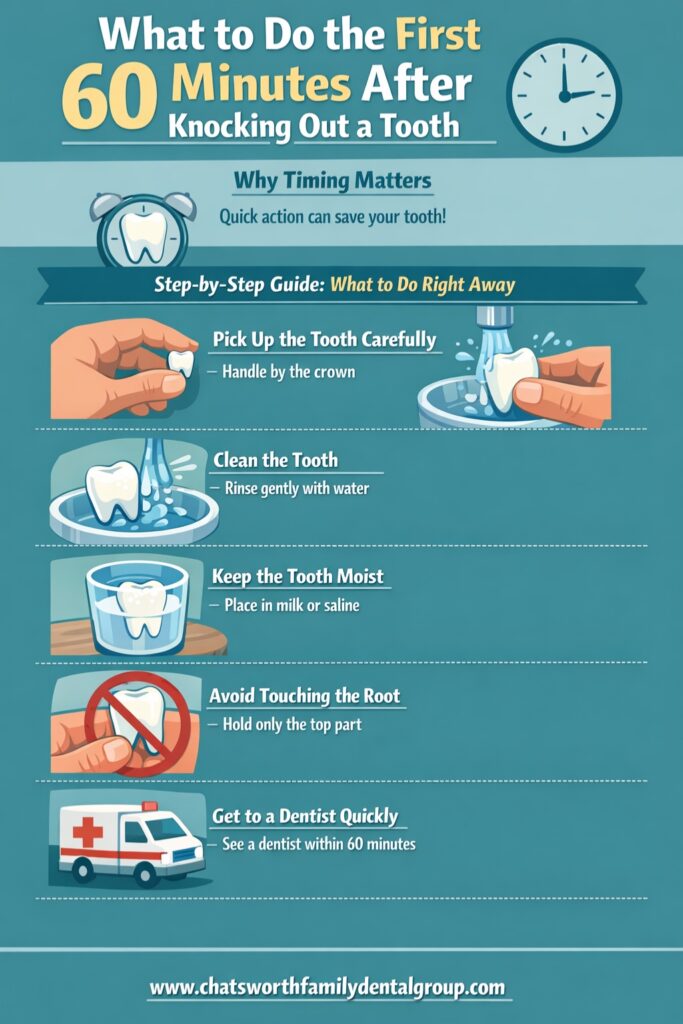
The term “Golden Hour” originates from emergency medicine, highlighting the crucial first hour following an injury. In dental emergencies, this period is just as important, particularly when dealing with a knocked-out tooth. Acting swiftly during these first 60 minutes can dramatically increase the chances of saving the tooth and preventing further complications.
Once a tooth is knocked out, the tissues that hold it in place begin to deteriorate. These tissues, known as the periodontal ligament, are responsible for anchoring the tooth in the jaw. If the tooth isn’t reimplanted within an hour, these tissues begin to break down, making it increasingly difficult for the tooth to reattach successfully. After 60 minutes, the tooth may not be viable for reimplantation, and you may have to resort to other dental treatments.
Scientific studies show that the survival rate of an avulsed (knocked-out) tooth is significantly higher when it is handled correctly and reimplanted as quickly as possible. According to the American Association of Endodontists, teeth that are replanted within 30 minutes have the best chance of survival, but those that are kept moist and handled properly may still be viable even after an hour. This underscores the importance of staying calm, following the necessary steps, and contacting an emergency dentist immediately.
Source: Beyond the Smile with Dr. Jaouni
Moreover, the quicker the tooth is reimplanted, the less likely the surrounding bone structure and soft tissue will suffer damage, which can complicate the process further. In some cases, if the tooth cannot be reimplanted within the Golden Hour, you may need to look into other restorative options like dental implants or bridges. However, the goal should always be to preserve the natural tooth if possible.
Step-by-Step Guide: What to Do Right Away
When you’ve knocked out a tooth, it’s important to handle the situation with care. Here’s a step-by-step guide to help you take the right actions in those critical first 60 minutes:
Step 1: Pick Up the Tooth Carefully
The first step is to retrieve the tooth. Make sure to pick it up by the crown (the part that’s visible in your mouth), not by the root. Handling the tooth by the root can cause damage to the delicate tissue structures that are essential for reimplantation. If the tooth has dirt or debris on it, avoid scrubbing it, as this can also damage it.
Step 2: Clean the Tooth (if necessary)
If the tooth is dirty, rinse it gently with clean water. Don’t use soap, alcohol, or any other cleaning agents, as they can harm the tooth. Do not scrub or brush the tooth, as this could cause further damage. A gentle rinse will suffice to remove any dirt or debris without compromising the tooth’s viability.
Step 3: Keep the Tooth Moist
The tooth needs to stay moist to preserve the periodontal ligament. If possible, place the tooth back into the socket and gently bite down to keep it in place. If reimplantation isn’t possible, place the tooth in a container with milk, saline solution, or your own saliva. Avoid storing the tooth in water, as it can cause the cells to swell and rupture, decreasing the chances of successful reattachment.
Step 4: Avoid Touching the Root
It’s crucial not to touch the root of the tooth, as this is where the periodontal ligament is located. Only touch the crown and handle the tooth as little as possible to prevent further damage.
Step 5: Get to a Dentist Quickly
The next critical step is to contact an emergency dentist in Chatsworth immediately. Time is of the essence, and getting professional dental care within the first hour maximizes the chances of saving the tooth. If you’re in the Chatsworth area, reach out to Chatsworth Family Dental Group as soon as possible. Our professional team can evaluate the situation and determine the best course of action.
When You Can’t Reimplant the Tooth: What to Do Next
In some cases, reimplanting the tooth may not be possible. However, this doesn’t mean you’re out of options. If the tooth cannot be saved, your dentist will discuss alternative treatments to restore your smile.
Dental Implants
Dental implants are one of the most effective solutions for replacing a lost tooth. They involve inserting a titanium post into the jawbone, which acts as an artificial tooth root. Once the post fuses with the bone, a custom crown is placed on top, restoring both the function and appearance of the tooth. Implants are highly durable and provide a permanent solution to missing teeth.
Bridges and Dentures
If a dental implant isn’t the best option, your dentist may recommend a bridge or dentures. A bridge involves attaching an artificial tooth to adjacent teeth, while dentures are removable appliances designed to replace multiple missing teeth. While these options don’t offer the same long-term benefits as implants, they can restore your ability to chew, speak, and smile with confidence.
Rest assured, your dentist at Chatsworth Family Dental Group will guide you through the best options based on your specific needs and budget.
What Not to Do
While knowing what to do after knocking out a tooth is critical, it’s equally important to know what not to do. Here are common mistakes people make in this situation:
Don’t Use Tap Water to Clean the Tooth
Tap water can be too harsh and may damage the tooth. Always use milk or saline solution to keep the tooth hydrated and prevent dehydration of the periodontal ligament.
Don’t Wait Too Long to See a Dentist
The longer you wait, the less likely it is that the tooth can be saved. Avoid delaying your visit to the emergency dentist in Chatsworth, as even an extra 30 minutes could reduce the chances of successful reimplantation.
Don’t Scrub or Brush the Tooth
While it may seem like a good idea to clean the tooth thoroughly, scrubbing or brushing can damage the root and periodontal ligament, making it more difficult for the tooth to reattach.
The first 60 minutes after knocking out a tooth are crucial in determining whether it can be saved. By following the right steps and getting professional care at Chatsworth Family Dental Group, you can increase your chances of reimplanting the tooth and restoring your smile. Remember to handle the tooth carefully, keep it moist, and seek immediate dental attention.
If you or someone you know experiences a dental emergency, call Chatsworth Family Dental Group immediately for professional care. Don’t wait. Take action fast to protect your smile!
Frequently Asked Questions
Can I clean the tooth with tap water?
No, avoid using tap water. Clean the tooth gently with milk, saline, or your saliva to preserve its cells.
How soon should I see a dentist after knocking out a tooth?
You should see an emergency dentist as soon as possible, ideally within the first hour, to maximize the chances of saving the tooth.
Can a knocked-out tooth be saved after it has dried out?
If the tooth has dried out, the chances of saving it are much lower, but a dentist may still try to reimplant it.
Should I rinse the tooth before storing it?
Only rinse the tooth if it’s dirty, and do so gently with water or saline. Avoid scrubbing or using soap.
Can a dentist save a tooth if it’s cracked or broken after being knocked out?
A cracked or broken tooth may still be repairable, depending on the extent of the damage. Your dentist will assess the best treatment option.